Network meeting 2 December 2025

A huge thank you to everyone who joined our network meeting. We’re absolutely thrilled that so many of you could make it, especially at such a busy time of year.
Host: Will Plant – Digital Inclusion Lead at Connecting Cambridgeshire
Co-Host: Sophie Skrimshire -National Management Trainee at Connecting Cambridgeshire
Co-Host: Karen Cann – Communications and Development Worker at CCVS
Guest Speakers:
Marcus Whewell, CEO of Cambridge Online
Susan Gowling, Sustainable Tech 4 Good Founder
Jason Sadler – Barclays Community Specialist in East Anglia
Attendees
Mark Freeman – CEO of Support Cambridgeshire
Jane Rich – Deputy CEO North (maternity) at Support Cambridgeshire
Denise Coates – Charity Partner Manager at Sustainable Tech 4 Good
Suzanne Goff – Preventative Health Programme Officer at Cambridge City Council
Mairead Wright – Employment Skills and Enterprise Manager at Amplius
Alex Stapleton – Digital Support Officer – East of England Clarion Futures Digital
Beth Mccabe – Delivery Manager at Region of Learning
Jack Avison – Digital and Community Engagement Coordinator at How Are You Fenland (CPFT)
Terry Henderson – Education Lead at CWU Eastern No 5 Branch
Irum Maqbool – Research and Impact Analyst at Centre 33
Gareth Owen – Business Development Manager at Precedence Technologies Ltd
Rosie Veitch – Library Development Officer at Cambridgeshire Libraries
Sarah Collins – Community Centre Manager at The Signal Box Centre
Kate Jakubowska – Community Wellbeing Administrator at Cambridgeshire Acre
Deborah Katznelson – Trustee at COPE (Cambridgeshire Older People’s Enterprise)
Kate Holmes – Engagement and Networking Officer at Digital Unite
Dorothy Halfhide – End Point Assessor at CILIP Pathways
Tina Oliver Jordan – Care Network
Elizabeth Brunton – Huntingdon Road Surgery
Robin Gildersleeve
Rae Shiu
Notes
Will Plant – Connecting Cambridgeshire

Will Plant, Digital Inclusion Lead for Connecting Cambridgeshire, opened with an update on the digital switchover campaign. This initiative, funded by the Combined Authority and delivered through Cambridgeshire County Council, aims to ensure residents and businesses are prepared for the upcoming switchover. While many in the sector are aware of the changes, Will highlighted that awareness among residents remains low, making this campaign essential.
The team partnered with Keystone Marketing to deliver a targeted residential communications campaign and worked with FarrPoint to provide workshops for businesses. These efforts have helped raise awareness and provide practical guidance on what steps people need to take. Will emphasised that the campaign is not a one-off; it will continue over the next 12 months to reinforce key messages and support communities.
Comprehensive resources are available on the Connecting Cambridgeshire website, including FAQs, guidance for residents, and a toolkit for organisations to navigate the switchover. A recording of the recent webinar for businesses is also accessible. Will encouraged members to share these materials widely and provide feedback on any gaps or additional needs.
Sophie Skrimshire – Connecting Cambridgeshire
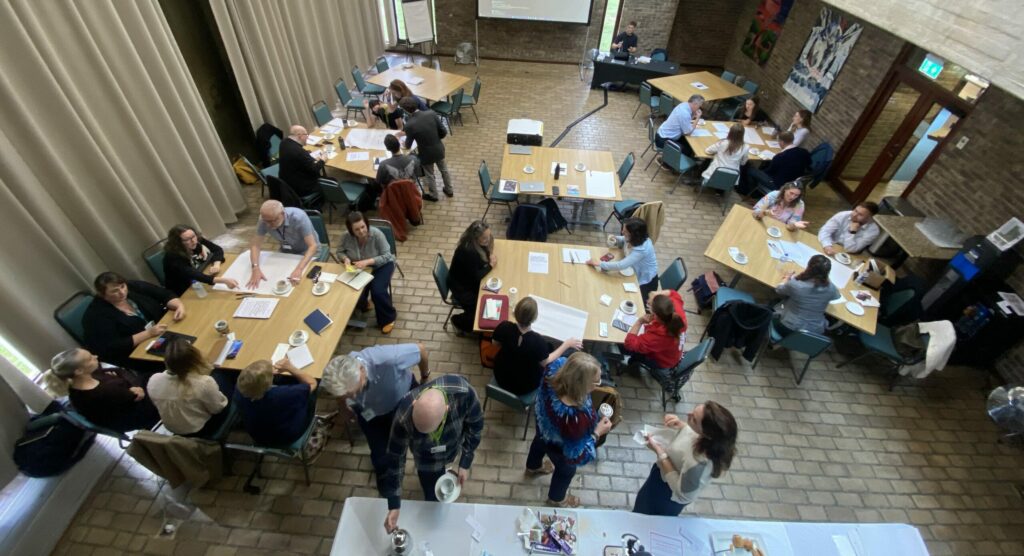
Sophie provided a recap of the End Digital Poverty Day event held on 11 September at Churchill College, Cambridge. The event attracted a strong turnout, including new organisations, and featured speakers from DSIT, Sustainable Tech for Good, and Places for People. These sessions offered valuable insights into national policy and local strategies for tackling digital exclusion.
Roundtable discussions revealed the breadth of digital inclusion projects across the region, such as Cambridgeshire Skills, Cambridge Online, libraries and repair cafés. However, participants also identified persistent challenges, including funding gaps, volunteer shortages, digital literacy needs and trust issues around digital services—particularly in areas such as online banking.
A key takeaway was the need for better coordination and visibility of initiatives. In response, Connecting Cambridgeshire has developed a Digital Directory and are developing an interactive map of local projects. These tools will make information more accessible and strengthen collaboration across the county.
Marcus Whewell – Cambridge Online
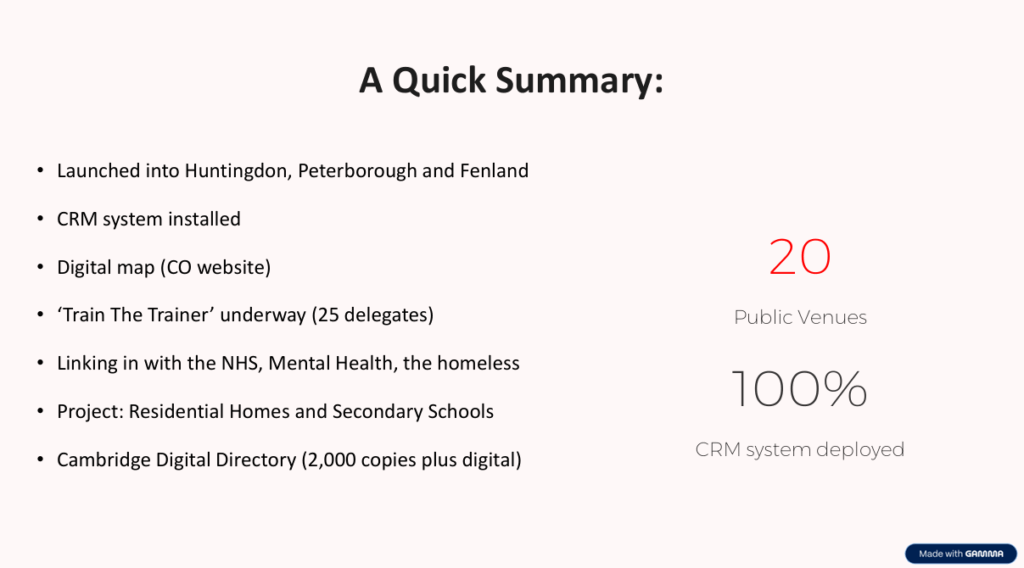
Marcus shared Cambridge Online’s progress in expanding services beyond Cambridge to Huntingdon, Peterborough and Fenland.
The organisation now operates in over 20 public venues, offering free drop-in sessions to support digital skills. This expansion reflects Cambridge Online’s commitment to reaching communities that face the greatest barriers to digital access.
A major development has been the introduction of a CRM system (Beacon) to track user interactions and provide ongoing support beyond initial contact. This system enables a more sustainable and personalised model of assistance, ensuring that help does not end after a single session. Marcus also highlighted the launch of a digital map on the website, showing all session locations for easy access.
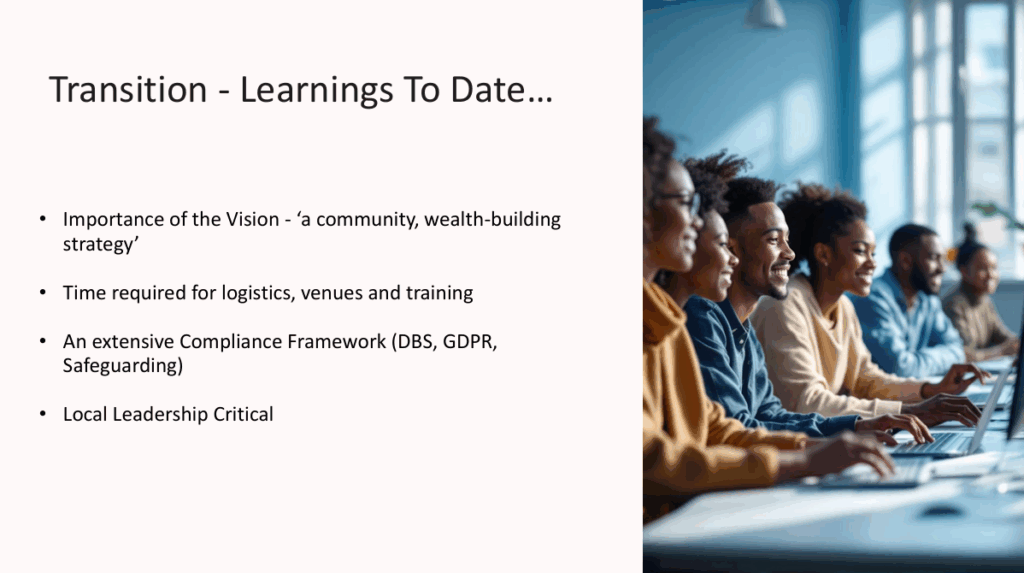
To amplify impact, Cambridge Online has introduced a Train the Trainer programme, which has already trained 25 community members to deliver local support.
The organisation is also working closely with the NHS, mental health services and homelessness projects, and has launched initiatives in residential homes and secondary schools to provide devices and training for pupils at risk of digital exclusion.

Marcus celebrated the success of the Cambridge Digital Directory, produced in partnership with Connecting Cambridgeshire. With 2,000 printed copies distributed and a digital version available online, the directory is helping residents connect with local support services. Looking ahead, Cambridge Online plans to expand to 25 venues, enhance reporting on user outcomes and pilot a call centre extension to offer optional follow-up support.
Sue Gowling – Sustainable Tech for Good
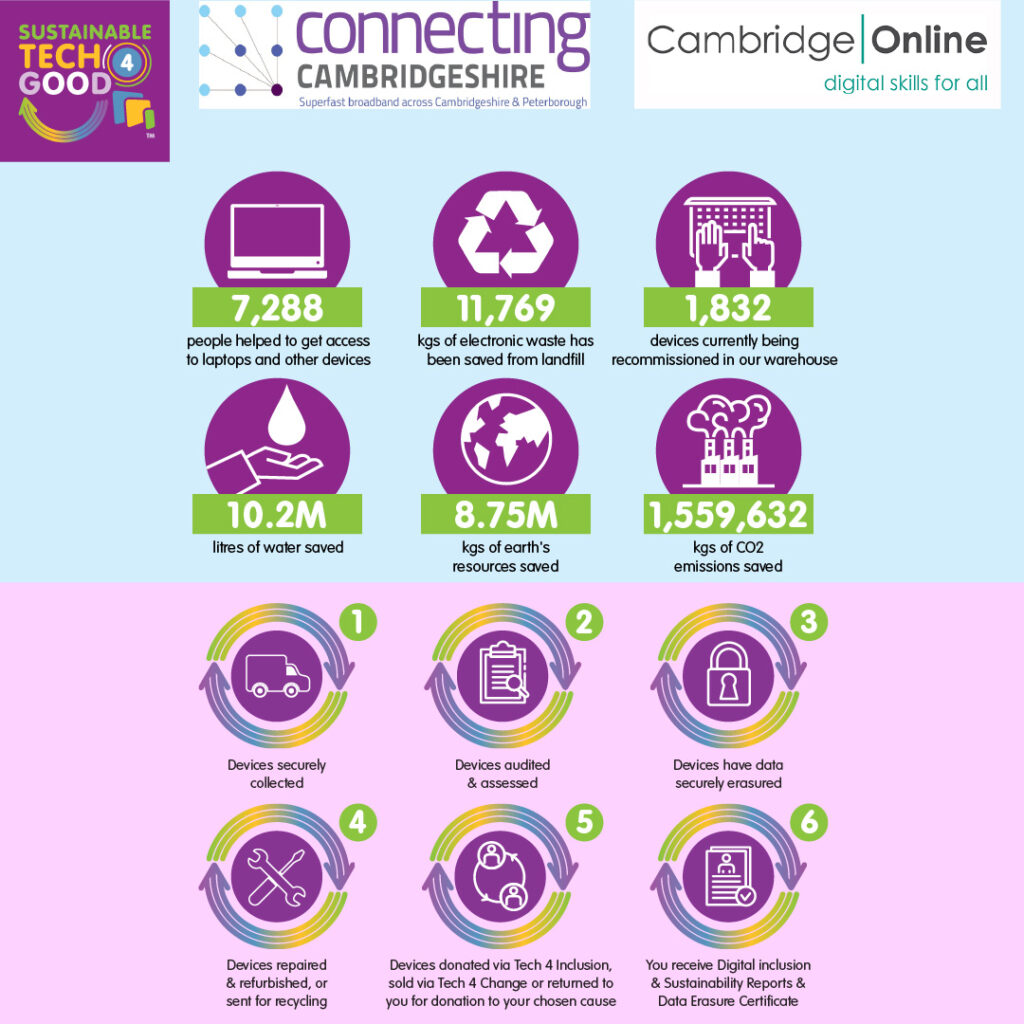
Sue introduced Sustainable Tech for Good (ST4G), an organisation tackling e-waste and promoting digital inclusion by refurbishing surplus technology from businesses. Since February 2020, ST4G has supported over 7,000 people with donated devices and saved 11,769 kg of electronic waste from landfill. The organisation tracks its environmental impact, including reductions in water usage and resource consumption, reinforcing its commitment to sustainability.
Every device undergoes secure data erasure to government standards, with certificates provided for full transparency. ST4G collects all types of tech—from laptops and tablets to networking equipment and servers—using its own trained couriers. Devices are audited, refurbished and repaired where possible; those beyond repair are dismantled for parts to maximise reuse and achieve a zero-landfill goal.
Refurbished devices are donated to partners such as Connecting Cambridgeshire and Cambridge Online or sold affordably through the Tech for Change platform. This dual approach helps bridge the digital divide while promoting circular economy principles. Sue encouraged members to donate surplus tech and help spread the word, noting that partnerships are key to expanding impact.
Jason Sadler – Barclays in the Community
Jason Sadler, Barclays’ Local Community Specialist, outlined his role supporting communities across Cambridgeshire, including Peterborough, Fenland, Huntingdon and Cambridge. A major focus has been fraud and scam prevention, with Jason delivering talks to over 2,000 people at 61 events this year. He works with charities, schools, senior groups and job centres to raise awareness and protect vulnerable individuals.

Jason also promotes Barclays’ digital learning platform, which is free and open to all, offering bite-sized modules, videos and quizzes to build digital confidence. This initiative supports digital inclusion and complements the work of organisations such as Cambridge Online. Whether setting up a device for the first time or improving digital skills, the platform provides accessible learning for everyone.

In addition, Barclays LifeSkills offers practical financial and employability training for all ages, covering budgeting, saving, credit scores, CV writing and interview techniques. These resources are delivered in schools, job centres and community settings. Jason highlighted the importance of making these sessions interactive and engaging, particularly for younger audiences.
Branches also host events on fraud prevention and online safety, providing accessible spaces for community engagement. Jason expressed his enthusiasm for the role, noting that after 25 years with Barclays, this position has allowed him to reconnect with communities and make a tangible difference. He thanked the network for the opportunity to share his work and looks forward to continuing to build partnerships that strengthen digital and financial resilience across the region.
Q&A
The presentations received great feedback from attendees and praise for the important work they have achieved.
There was also useful suggestions and signposting from members.
Lovely to see a couple of Digital Inclusion Directory deliveries arranged in the chat.
Beth Mccabe from Region of Learning mentioned their Digital badges in the chat.
Kate Holmes – Engagement and Networking Officer at Digital Unite shared these two links:
“A set of links to make your work life a little easier”: Our Christmas Link List | Digital Unite
Will ended the meeting by thanking members for supporting the network, and that we welcome feedback and ideas.
You can sign up to our next meeting on 26 February here.
Thank you again for all those who attended, have a great festive break, and remember you can get in touch anytime if you would like to ask questions or share news with the group: [email protected]